
Portfolio Redesign
UX/UI Design
Introduction
I decided to improve my portfolio and show it more engagingly after becoming a professional in the field of user experience design (UX). After looking through my previously released portfolio, it gave the impression that I was looking for ways to get into the UX industry and present my knowledge. The projects in this initial portfolio, which I put together while earning the Google UX certification through Coursera, were ones I worked on throughout the course and as an IT analyst. Although it was a significant turning point, once I began working in the industry directly, I felt the need to create a fresh portfolio that better reflected my work and personality.
One of the most significant changes I made was creating a page that presented the projects clearly and approached my work more directly. Although I had chosen a One Page website format for my previous portfolio, some comments mentioned that it was too lengthy. Taking advantage of this feedback, I decided to build a new portfolio with topics divided into separate pages to provide a better user experience.
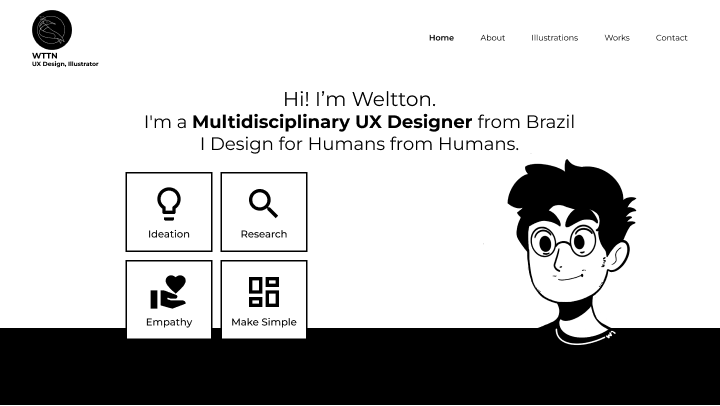
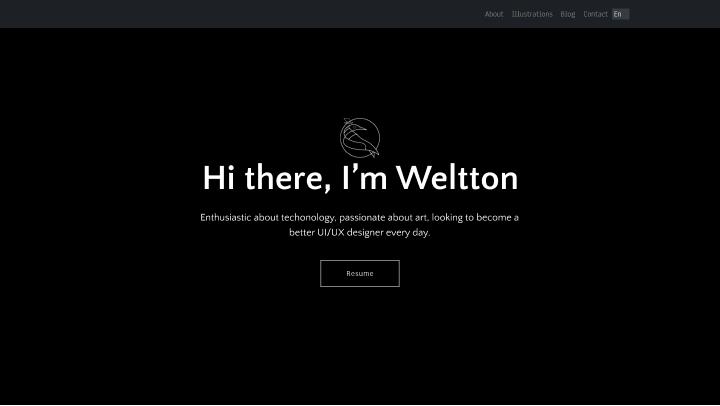
A comparison of the hero section portfolios from the old and new.
Challenge
The biggest difficulty I faced with this project was learning something completely new to use. In the past, when I worked as an analyst, I used Wordpress with modular themes or the Hugo Framework. I challenged myself in this project and tried to create a portfolio from scratch, following the end-to-end process, making a prototype, writing the code, and deploying it to production. After completing the research and prototyping stages, I took some JavaScript courses and Chakra UI classes, and started turning my prototype into code.
My deepest gratitude goes to a front-end friend who had patience with me for hours, answering numerous questions and teaching me best practices. Although I believe there's still much to improve, I'm happy with the development of my portfolio.
Illustrations
Another important point was the separation of pages related to my UX Design work and illustration, as the latter is an activity I engage in more as a hobby and freelancer. I chose not to delete it from my portfolio because, in specific cases, I send it to people who contact me with an interest in that aspect. Additionally, I consider illustration to be a part of my personality, so I decided to create a dedicated page for it, where I can showcase images with the desired quality, unlike social media platforms like Instagram, where the images tend to lose their quality and are primarily used for social purposes.
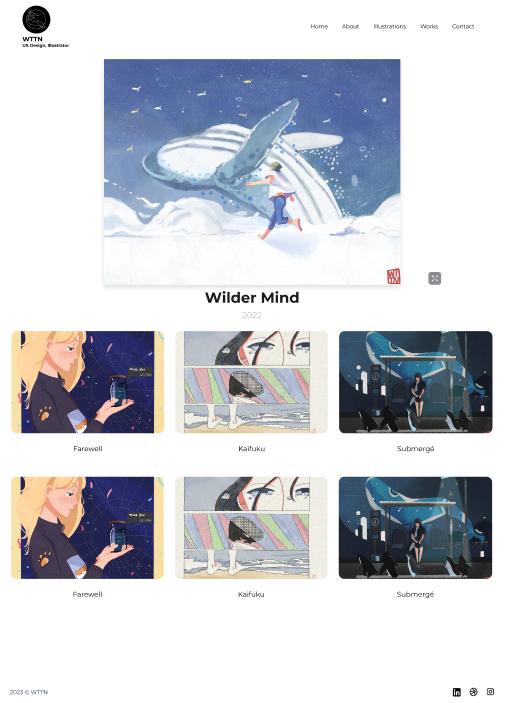
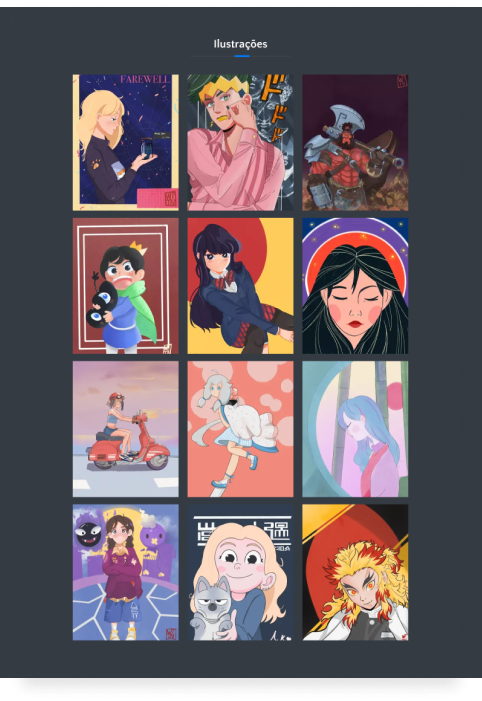
A comparison between the new Illustration dedicated page and previous Illustration section.
Incorporating Languages
In this phase of portfolio development, I aimed to incorporate a second language to communicate with a broader audience, showcase greater credibility and language proficiency, aid in SEO and page visibility, as well as enhance accessibility.
Adapting the text and creating content designed for both languages were the main challenges encountered during this stage. In my previous portfolio, not all content was translated and, eventually, was set aside. I ensured that all content was translated in this stage of my development. Another challenge was learning to use the react-i18next library for internationalization (i18n), adapting the site to support two languages, which posed an additional challenge.
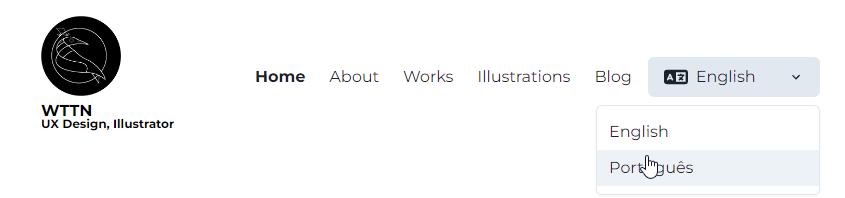
Header Bar with language option
Conclusion
In the execution of this project, both on a personal and professional level, I dedicated myself to revamping my portfolio, aiming to infuse it with my identity. I tackled each stage of the process, from initial conception to implementation, undergoing comprehensive testing with diverse user groups. The feedback from these evaluations was crucial: I adapted the project based on the needs and insights gathered.
The experience of delving into front-end development, aided by friends and the opportunity to collaborate directly in the coding process.
There are several aspects that I acknowledge as capable of improvement in my portfolio. These enhancements will be implemented progressively, focusing on elevating code quality and optimizing website responsiveness. Additionally, the need to revisit my portfolio regarding accessibility, adhering to standards set by WCAG.
My dedication to improving this portfolio will persist, as I strive to document my professional evolution and the projects that lie ahead over time.